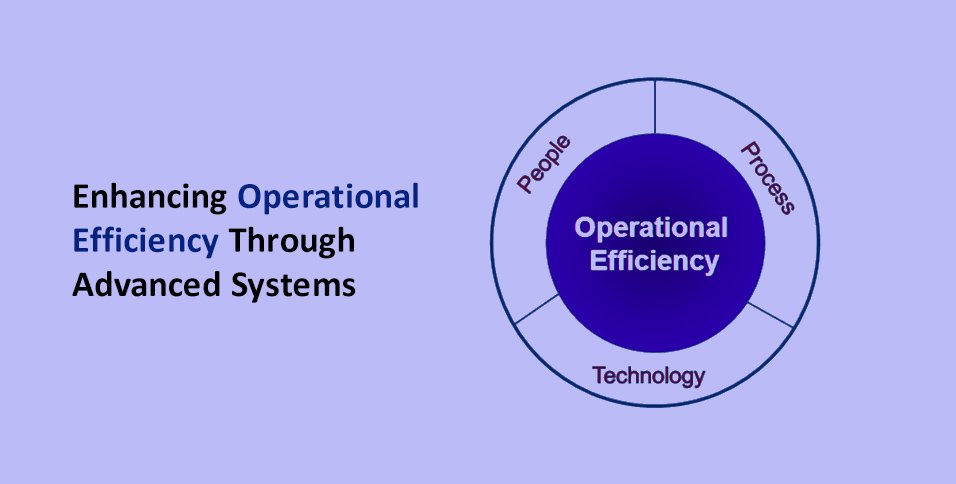
When growth feels like a constant uphill battle against mounting complexity and stalled progress, you're not alone. Many organizations, flush with capital and market ambition, hit unexpected plateaus because their internal engines can't keep pace. This often points to a critical, yet frequently overlooked, foundation for enduring success: Operational Efficiency & Scalability. It’s the art of building a system that consistently delivers value, even as demands grow, ensuring your business thrives without buckling under its own weight.
In essence, operational efficiency means streamlining processes, slashing waste, and creating an infrastructure robust enough to support aggressive growth without sacrificing quality or profitability. It's the silent, scalable advantage that transforms ambition into consistent execution. Indeed, a 2023 study by The Collective revealed a sobering truth: 70% of scaling companies experienced growth stalls due to operational inefficiencies—not a lack of market demand or leadership vision. Flawed processes, redundant workflows, and misaligned resources silently erode the very scalability they aim for.
My own experience at Toyota/Lexus, a global benchmark in operational excellence, reinforced this principle profoundly. The meticulous attention paid to how things are done—to the process itself, rather than solely the final product—is what truly determines long-term performance and ensures that big goals translate into tangible results.
At a Glance: What You'll Learn
- Why efficiency isn't just about cost-cutting: It's about smart growth and delivering consistent value.
- The Five Lean Principles: A powerful framework derived from Toyota's success to optimize any operation.
- Practical strategies: How to audit workflows, leverage technology, standardize processes, and empower your team.
- Why operational excellence is a leadership imperative: And the competitive advantages it unlocks.
- How to build systems that scale: Allowing you to grow without breaking your business or burning out your people.
Redefining Growth: It's Not Just About Getting Bigger
Many leaders equate growth with expansion—more customers, more products, more market share. While these are certainly aspects of growth, smart growth is different. It’s about increasing output and impact without a proportional increase in effort, cost, or chaos. It’s the ability to consistently deliver more value as complexity rises, turning every new client or project into an opportunity, not an operational headache.
Without operational efficiency, growth often leads to a tangled web of redundant tasks, communication breakdowns, and burnout. You might be busy, but are you truly productive? Are your efforts building lasting value, or are you constantly patching cracks in a leaky system? This distinction is crucial, because scaling isn't merely doing more; it’s about doing what matters with precision, alignment, and purpose, laying a solid foundation for every step forward.
The Unseen Advantage: Why Operations Are Your Growth Engine
For too long, operations have been relegated to the "back office," viewed as a cost center rather than a strategic powerhouse. This perspective misses the fundamental truth: operations are the engine of your business. They determine how effectively you turn strategy into execution, how reliably you deliver on promises, and ultimately, how much profit you retain from your revenue.
Think of it this way: you can have the most brilliant strategy, the best product idea, or unlimited capital, but if your internal processes are flawed, execution will falter. The Toyota/Lexus story exemplifies this perfectly. Their relentless focus on process perfection, honed over decades, allowed them to deliver consistently high-quality products at scale, setting a global benchmark. It wasn't just about revolutionary car designs; it was about revolutionary ways of making cars. This deep commitment to operational maturity, rather than purely product innovation, determines long-term performance and ensures that ambition translates into reliable, repeatable success.
The Lean Blueprint: Five Principles for Operational Excellence
The Five Lean Principles, born from the Toyota Production System, offer a universally applicable framework for achieving operational excellence. They guide you to systematically eliminate waste and maximize value in any business, from manufacturing to B2B services.
1. Identify Value: What Truly Matters to Your Customer?
Efficiency doesn't start with cutting costs; it starts with understanding value. What do your customers truly cherish about your offering? What aspects drive their loyalty, impact their experience, and encourage repeat business? Too often, businesses optimize for things customers don't actually care about.
This principle demands asking tough questions: Are your efforts delivering what matters most? For instance, a B2B services company, initially focused on rapid turnaround times, conducted in-depth customer interviews. They discovered that while speed was appreciated, responsiveness to questions and proactive problem-solving were valued far more. By realigning their priorities, focusing on quick, thorough responses, and empowering service teams, they reduced unnecessary service escalations by 30%. This not only improved customer satisfaction but also freed up resources previously spent on reactive firefighting.
2. Map the Value Stream: Uncovering the Hidden Steps
Once you've clarified what your customer values, the next step is to visualize every single action involved in delivering that value. This "value stream mapping" is like drawing a detailed flowchart of your entire process, from initial request to final delivery. This mapping process is incredibly revealing. It exposes duplicative steps, clarifies approval delays, highlights manual handoffs that introduce errors, and pinpoints underutilized resources.
Consider a firm with a ten-step client onboarding process. Through value stream mapping, they discovered that three of those steps involved redundant ID verification checks at different stages. Post-realignment, these checks were consolidated, reducing the process duration from fifteen days to just seven. Suddenly, clients were onboarded faster, and internal teams wasted less time chasing identical information. It's a powerful exercise that turns abstract processes into concrete pathways for improvement.
3. Create Flow: Ensuring Smooth, Uninterrupted Progress
Flow is about ensuring work moves seamlessly through your system without bottlenecks, interruptions, or "dead zones." It demands close coordination between teams, real-time visibility into process status, and a relentless focus on removing anything that causes work to stall.
At Toyota, creating flow was often about brilliant design. A seemingly minor adjustment, like repositioning a tool on an assembly line so workers didn't have to reach as far, could save hours weekly across thousands of repetitions. These micro-efficiencies aggregate into macro-impact. Think about your own organization: Are projects frequently handed off between departments with long waiting periods in between? Do teams operate in silos, unaware of upstream or downstream impacts? Creating flow means breaking down these barriers, synchronizing efforts, and designing your system so that value creation is a continuous, unimpeded motion.
4. Establish Pull: Producing Based on Actual Demand
The "pull" principle is a fundamental shift from traditional "push" systems. Instead of pushing production based on forecasts or assumptions, you "pull" resources and initiate work only when there's actual customer demand. This minimizes overproduction, reduces inventory costs, and ensures that effort is always aligned with what's truly needed.
Imagine a tech startup that historically built new features based on a projected product roadmap, often resulting in features that languished unused. By transitioning to a pull model tied to live customer feedback and immediate pipeline activity, they only initiated development when specific market demand or customer contracts justified it. This approach reduced their overhead by 22% without impacting delivery timelines, simply by avoiding the waste of building things nobody needed right now. Pull systems align your output directly with value consumption, making your operations lean and responsive.
5. Seek Perfection: The Journey Never Ends
Lean is not a destination; it's a continuous journey. The principle of "seek perfection" emphasizes constant adaptation, improvement, and learning. It means establishing robust feedback loops, empowering frontline employees to identify and fix issues, and embracing the idea of small, frequent process enhancements.
Every team member should feel empowered to contribute to better ways of working. This isn't about achieving an impossible ideal, but about the relentless pursuit of it. By fostering a culture where questions are encouraged, problems are seen as opportunities, and incremental improvements are celebrated, organizations ensure they are always evolving. It creates an environment where your operational systems don't just endure; they constantly get better, building a powerful momentum that Explore momentum generation for your entire business.
Beyond Lean: Bolstering Your Operational Muscle
While the Lean Principles provide a foundational philosophy, several practical strategies work in tandem to amplify operational efficiency and scalability.
Audit Your Workflows: The Detective Work of Efficiency
Before you can fix something, you need to understand it. Systematically auditing existing workflows means meticulously tracing every step in your processes to identify bottlenecks, redundancies, manual errors, and underutilized capacity. This is more than just mapping; it’s a critical review, asking: "Why do we do it this way? Is there a better, simpler, faster way?"
Begin by choosing a critical process (e.g., customer onboarding, product delivery, billing). Gather the people involved at each step. Use visual tools—whiteboards, flowcharts—to map the current state. Look for:
- Waiting times: Where do things sit idle?
- Handoff points: Are there too many, leading to communication gaps?
- Rework loops: Are tasks frequently sent back for correction?
- Unnecessary steps: Are there legacy tasks that no longer serve a purpose?
This diagnostic step often uncovers "hidden factories" where rework and delays consume significant time and resources.
Leverage Technology: The Accelerant for Streamlining
The right technology isn't just about automation; it's about intelligent orchestration. Investing in tools like automation platforms, AI-powered analytics, and cloud-based collaboration systems can significantly streamline operations.
- Automation: Automate repetitive, rule-based tasks (e.g., data entry, report generation, routine customer communications). This frees up human talent for more complex, creative, and strategic work.
- AI & Machine Learning: Use AI to analyze large datasets for patterns, predict demand, optimize resource allocation, or even automate decision-making in specific areas.
- Cloud-based Platforms: Facilitate real-time collaboration, provide centralized data access, and enable remote work, breaking down geographical barriers to efficiency.
- Integrated Systems: Break down data silos by integrating CRM, ERP, and project management tools. This ensures a single source of truth and eliminates the need for manual data reconciliation.
The key is to use technology strategically—not just to digitize old, inefficient processes, but to reimagine them for a digital age.
Standardize Processes: The Blueprint for Consistency
As your business grows, maintaining quality and consistency becomes paramount. Standardizing processes means creating repeatable systems and clear guidelines for how tasks should be performed. This doesn't stifle innovation; it creates a stable base from which innovation can safely emerge.
- Develop SOPs (Standard Operating Procedures): Document step-by-step instructions for key processes.
- Create Checklists and Templates: Ensure consistency and reduce cognitive load for employees.
- Define Clear Roles and Responsibilities: Eliminate ambiguity and foster accountability.
- Implement Quality Gates: Embed checks at critical points to catch errors early.
Standardization ensures that every customer receives the same high-quality experience, every product meets the same specifications, and every project follows a predictable path, making growth manageable and consistent.
Train Your Team: Your Most Powerful Operational Asset
Your employees are on the front lines of your operations. Equipping them with the necessary skills, knowledge, and empowerment to identify and address inefficiencies is non-negotiable. An untrained workforce is a bottleneck waiting to happen.
- Continuous Learning: Invest in ongoing training programs for new tools, processes, and best practices.
- Problem-Solving Skills: Train teams in Lean methodologies, root cause analysis, and continuous improvement techniques. Empower them to suggest and implement changes.
- Cross-Functional Training: Enable employees to understand the broader operational context, fostering collaboration and empathy across departments.
- Feedback Loops: Create channels for employees to provide feedback on processes. They often have the best insights into where improvements can be made.
When employees are well-trained and empowered, they become active participants in operational excellence, driving improvements from the bottom up.
Operational Efficiency: A Strategic Imperative, Not Just a Back-Office Task
Make no mistake: operational efficiency is a strategic leadership lever, not merely a concern for the back office. Leaders who proactively invest in developing operational maturity report significant competitive advantages across the board:
- Reduced Customer Churn: Consistency in delivery and service builds trust and loyalty.
- Faster Cycle Times: From concept to cash, quicker processes lead to earlier revenue recognition.
- Clearer Accountability: Defined processes and roles reduce internal conflict and finger-pointing.
- More Confident Forecasting and Planning: Predictable operations make future growth initiatives less risky.
- Improved Profit Margins: By reducing waste and optimizing resource use, businesses retain more of their revenue.
- Enhanced Customer Satisfaction: Faster delivery, fewer errors, and better service naturally lead to happier customers.
By repeatedly delivering value without delay, rework, or friction, businesses don't just save money; they create capacity. They build the ability to grow aggressively without inflating their cost structures or, critically, burning out their talented people. Operational excellence isn’t just about making things run smoothly; it’s about making your business fundamentally stronger and more resilient against the inevitable challenges of scaling. It’s the ultimate enabler of sustainable, profitable growth.
Common Roadblocks to Scalability (and How to Clear Them)
Even with the best intentions, organizations often stumble on the path to operational efficiency. Recognizing these common pitfalls is the first step to avoiding them.
- The "We've Always Done It This Way" Mentality: Resistance to change is perhaps the biggest barrier. Overcome this by communicating the why—how efficiency benefits individuals, teams, and the company. Involve employees in the process of identifying problems and solutions.
- Lack of Leadership Buy-in: If leaders don't champion operational excellence, it won't gain traction. Demonstrate the ROI through pilot projects and present clear data on the impact of inefficiencies.
- Siloed Operations: Departments working in isolation create handoff friction and duplicated efforts. Foster cross-functional collaboration, create shared goals, and use integrated systems to break down silos.
- Ignoring Frontline Insights: The people doing the work often have the best solutions. Create formal and informal channels for their feedback and empower them to implement small improvements.
- "Shiny Object Syndrome": Chasing every new tech solution without a clear strategy. Technology should serve your process improvements, not define them. Identify process problems before looking for a tech solution.
- Lack of Measurement: Without clear metrics, you can't track progress or identify areas needing attention. Define key performance indicators (KPIs) for efficiency and regularly review them.
Clearing these roadblocks requires a combination of strategic vision, strong leadership, cultural shifts, and a commitment to continuous improvement.
Measuring Success: How Do You Know You're Efficient?
Operational efficiency isn't a nebulous concept; its impact can and should be measured. Without metrics, you’re just guessing. Here are key areas to track:
- Cycle Time: The total time it takes to complete a process from start to finish (e.g., customer onboarding time, product delivery time). Shorter cycle times indicate greater efficiency.
- Throughput: The rate at which your system processes units or completes tasks over a given period. Higher throughput with stable resources suggests better efficiency.
- Error Rates/Rework: The percentage of output that requires correction or rework. Lower rates mean higher quality and less wasted effort.
- Cost Per Unit/Transaction: The total cost associated with producing one unit or completing one transaction. Reduced costs indicate improved efficiency.
- Resource Utilization: How effectively your human, technological, and financial resources are being used. Are machines idle? Are employees bogged down with non-value-adding tasks?
- Customer Satisfaction (CSAT/NPS): While not purely operational, efficient operations often directly lead to happier customers due to faster service, fewer errors, and consistent quality.
- Employee Engagement/Productivity: Engaged employees are often more productive. Efficiency can reduce frustration and workload, leading to higher morale.
Regularly review these metrics, set clear benchmarks, and communicate progress widely. This data-driven approach allows you to identify successes, pinpoint new areas for improvement, and demonstrate the tangible benefits of your efficiency initiatives.
Your Path to Sustainable Growth: Starting Today
Operational Efficiency & Scalability isn't a one-time project; it's an ongoing commitment, a cultural mindset. Organizations that scale well understand this and prioritize building robust, adaptable systems before expanding. They know that efficiency isn't about doing more with less; it’s about doing what truly matters with precision, alignment, and purpose, ensuring every effort contributes to a stronger, more resilient business.
Start small. Pick one critical process that causes consistent friction. Map its value stream. Engage your team in identifying waste. Implement a small change. Measure the impact. Celebrate the improvement. Then, move to the next. By embedding this culture of continuous improvement into your organizational DNA, you won't just achieve growth; you'll achieve smart growth, consistently delivering value, delighting customers, and building a foundation for enduring success.